实验目的
通过C++编程实现移位密码和单表置换密码算法,加深对经典密码体制的了解。并通过对这两种密码实施攻击,了解对古典密码体制的攻击方法。
实验内容
根据实验原理部分对移位密码算法的介绍,自己创建明文信息,并选择一个密钥,编写移位密码算法实现程序,实现加密和解密操作。
两个同学为一组,互相攻击对方用移位密码加密获得的密文,恢复出其明文和密钥。
自己创建明文信息,并选择一个密钥,构建置换表。编写置换密码的加解密实现程序,实现加密和解密操作。
用频率统计方法,试译下面用单表置换加密的一段密文: SIC GCBSPNA XPMHACQ JB GPYXSMEPNXIY JR SINS MF SPNBRQJSSJBE JBFMPQNSJMB FPMQ N XMJBS N SM N XMJBS H HY QCNBR MF N XMRRJHAY JBRCGZPC GINBBCA JB RZGI N VNY SINS SIC MPJEJBNA QCRRNEC GNB MBAY HC PCGMTCPCD HY SIC PJEISFZA PCGJXJCBSR SIC XNPSJGJXNBSR JB SIC SPNBRNGSJMB NPC NAJGC SIC MPJEJBNSMP MF SIC QCRRNEC HMH SIC PCGCJTCP NBD MRGNP N XMRRJHAC MXXMBCBS VIM VJRICR SM ENJB ZBNZSIMPJOCD GMBSPMA MF SIC QCRRNEC 写出获得的明文消息和置换表。
实验过程
移位密码
实验原理
移位密码:将英文字母向前或向后移动一个固定位置。例如向后移动3个位 置,即对字母表作置换(不分大小写)。
设明文为:public keys,则经过以上置换就变成了:sxeolf nhbv。 如果将26个英文字母进行编码:A→0,B→1,...,Z→25,则以上加密过程可简单地写成: 明文:m=m1m2...mi..., 则有 密文:c=c1c2...ci..., 其中 ci=(mi+key mod26),i=1,2,...。
算法流程图
加密
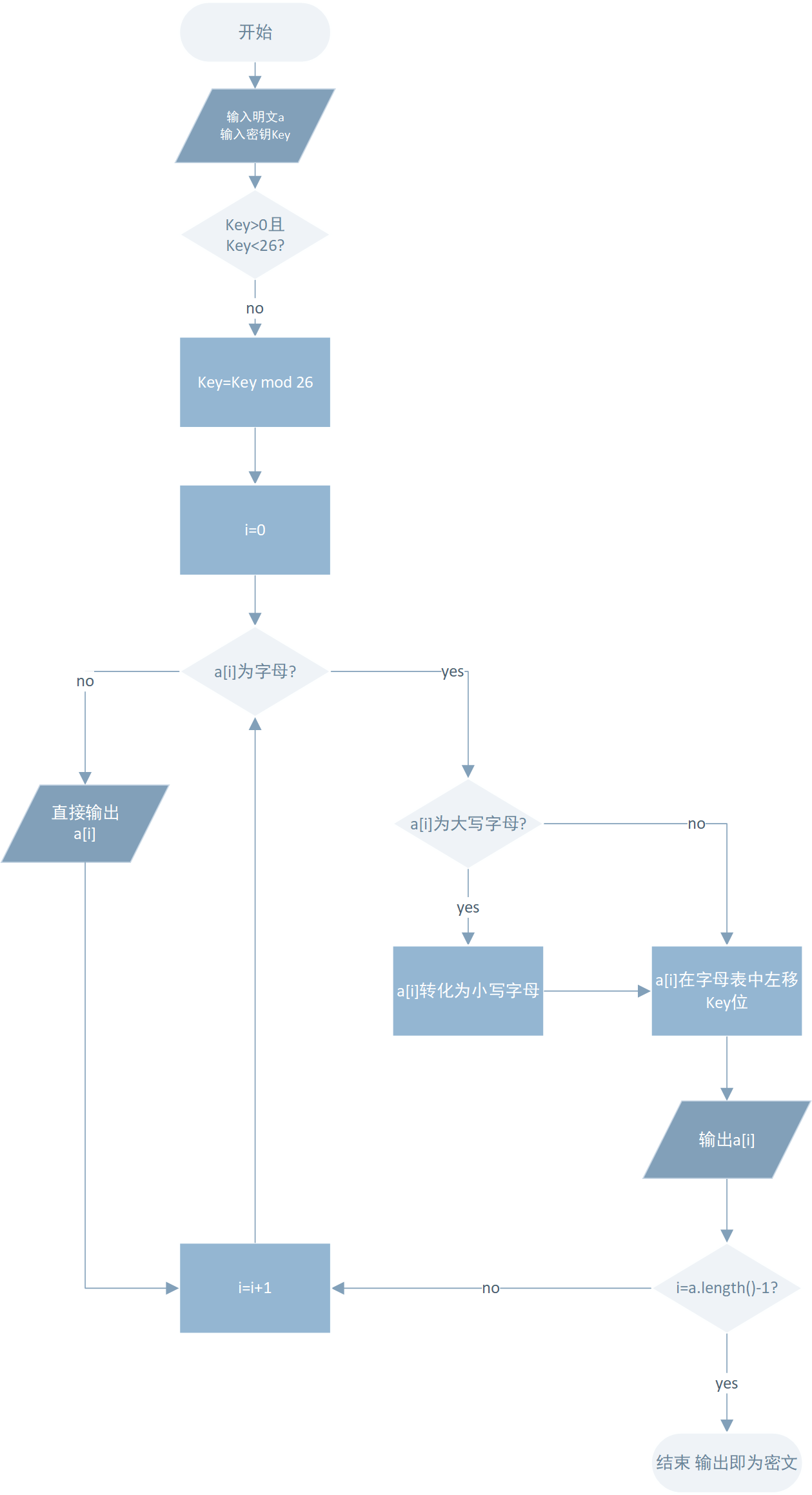
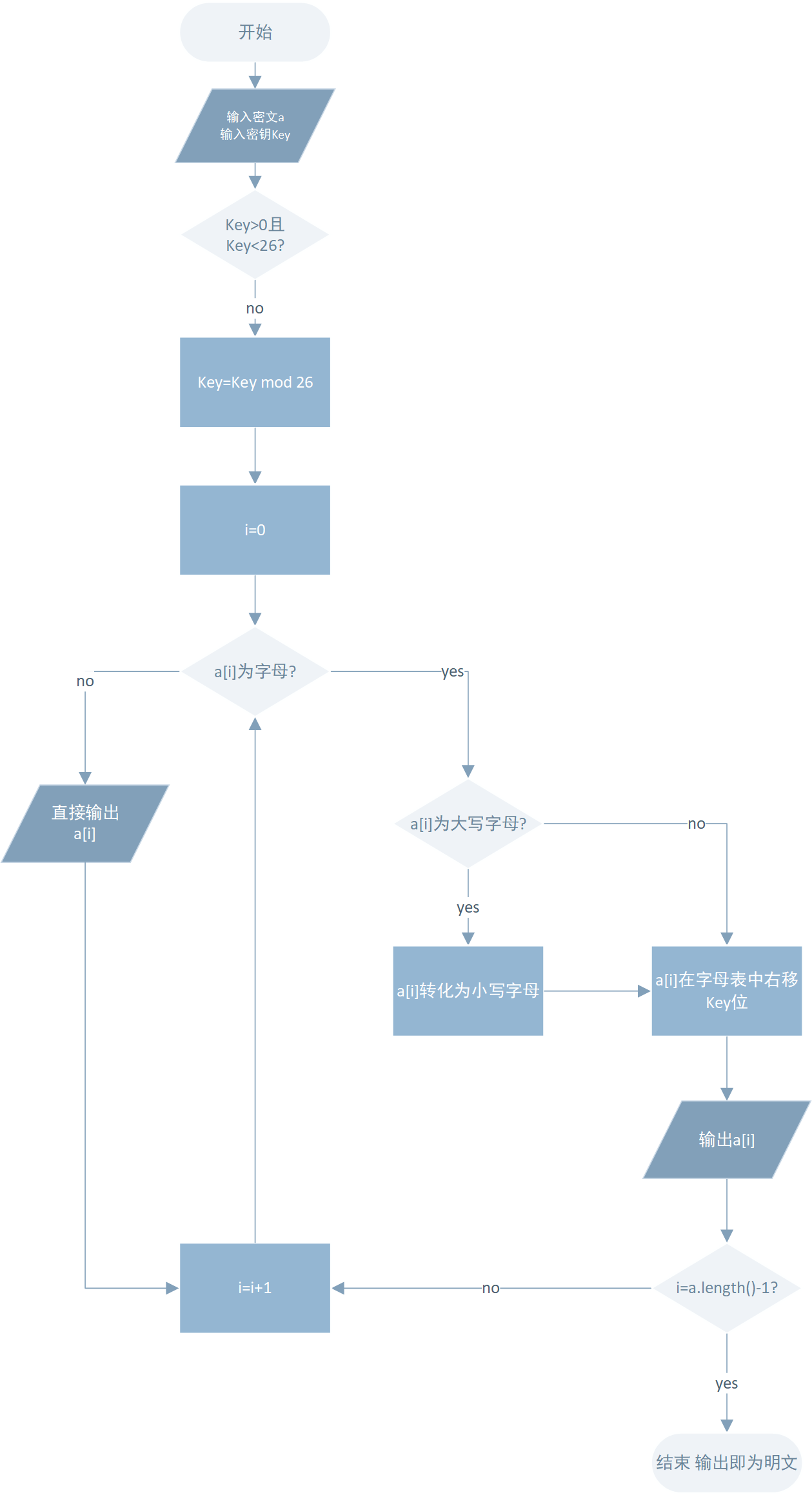
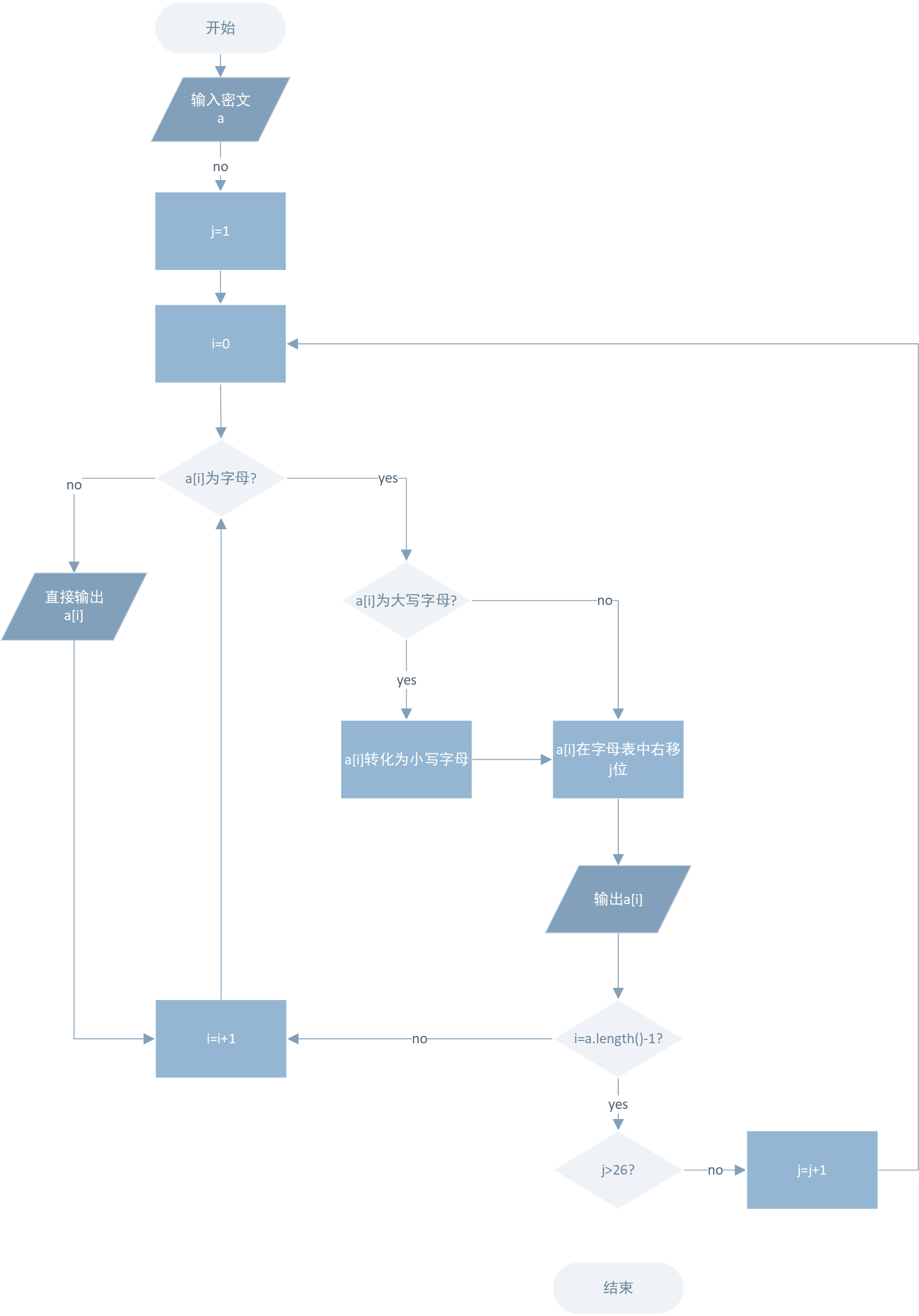
移位密码加密算法流程图
解密
实验代码
加密代码:
1
2
3
4
5
6
7
8
9
10
11
12
13
14
15
16
17
18
19
20
cout << "请输入要加密的内容:\t" ; string a; getline (cin, a);getline (cin, a);int len = a.length ();int n1;cout << "请输入移位位数:\t" ; cin >> n1; if (n1 >= 26 ) { n1 %= 26 ; }string* key1 = new string[len]; cout << "加密结果:\t\t" ; for (int i = 0 ; i < len; i++) { if (a[i] < 65 || (a[i] > 90 && a[i] < 97 ) || a[i]>122 ) { cout << a[i]; continue ; } if (a[i] >= 65 && a[i] <= 90 ) { a[i] += 32 ; } if (a[i] + n1 > 122 ) { a[i] -= 26 ; } key1[i] = char (int (a[i]) + n1); cout << key1[i]; } cout << endl;
解密代码:
1
2
3
4
5
6
7
8
9
10
11
12
13
14
15
16
17
18
19
cout << "请输入要解密的内容:\t" ; string a; getline (cin, a);getline (cin, a);int len = a.length ();int n1;cout << "请输入移位位数:\t" ; cin >> n1; if (n1 >= 26 ) { n1 %= 26 ; }string* key1 = new string[len]; cout << "解密结果:\t\t" ; for (int i = 0 ; i < len; i++) { if (a[i] < 65 || (a[i] > 90 && a[i] < 97 ) || a[i]>122 ) { cout << a[i]; continue ; } if (a[i] >= 65 && a[i] <= 90 ) { a[i] += 32 ; } if (a[i] - n1 < 97 ) { a[i] += 26 ; } key1[i] = char (int (a[i]) - n1); cout << key1[i]; } cout << endl;
实验结果
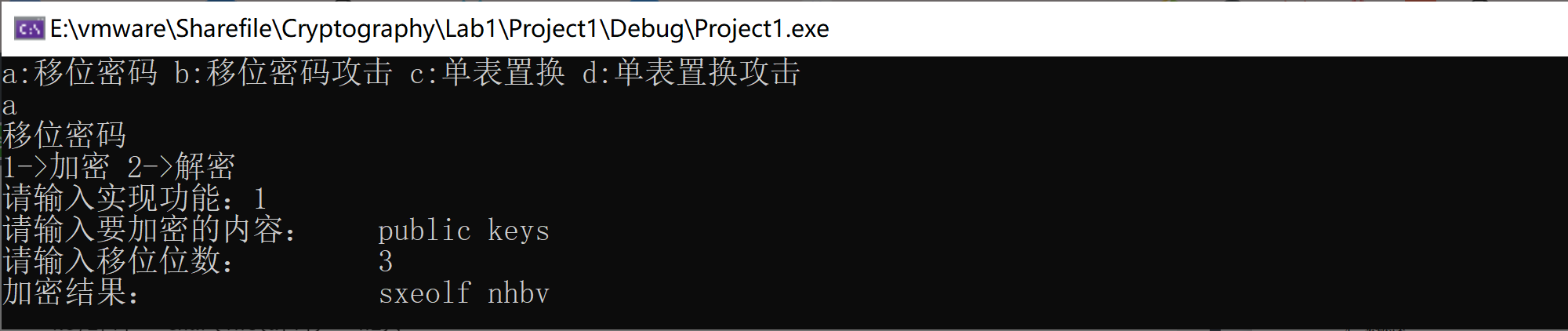
加密: 输入明文为public keys,密钥为3(即凯撒密码),输出结果应为sxeolf nhbv。
明文加密结果
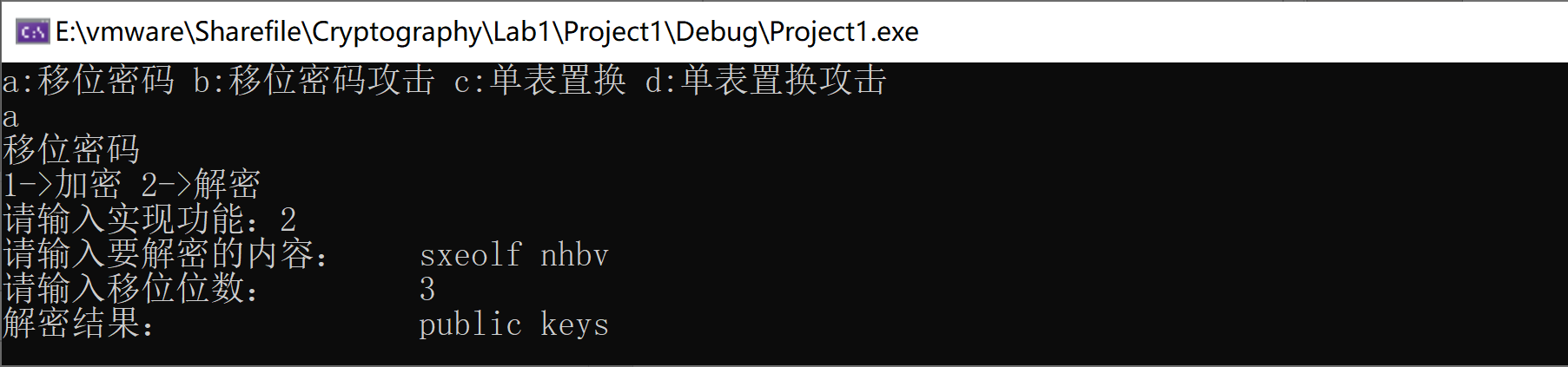
解密:将上述得到的结果进行解密,输出结果应为public keys:
密文解密结果
对移位密码的攻击
实验原理
移位密码是一种最简单的密码,其有效密钥空间大小为25。因此,很容易用 穷举的方法攻破。穷举密钥攻击是指攻击者对可能的密钥的穷举,也就是用所有可能的密钥解密密文,直到得到有意义的明文,由此确定出正确的密钥和明文的攻击方法。对移位密码进行穷举密钥攻击,最多只要试译25次就可以得到正确的密钥和明文。
算法流程图
对移位密码的攻击算法流程图
实验代码
title 1 2 3 4 5 6 7 8 9 10 11 12 13 14 15 16 17 18 cout << "请输入要解密的内容:\t"; string b; getline(cin, b); getline(cin, b); int len = b.length(); string* key1 = new string[len]; for (int j = 1; j <= 26; j++) { cout << "密钥为:" << j << "\t"; for (int i = 0; i < len; i++) { string a = b; if (a[i] < 65 || (a[i] > 90 && a[i] < 97) || a[i]>122) { cout << a[i]; continue; } if (a[i] >= 65 && a[i] <= 90) { a[i] += 32; } if (a[i] - j < 97) { a[i] += 26; } key1[i] = char(int(a[i]) - j); cout << key1[i]; } cout << endl; }
实验结果
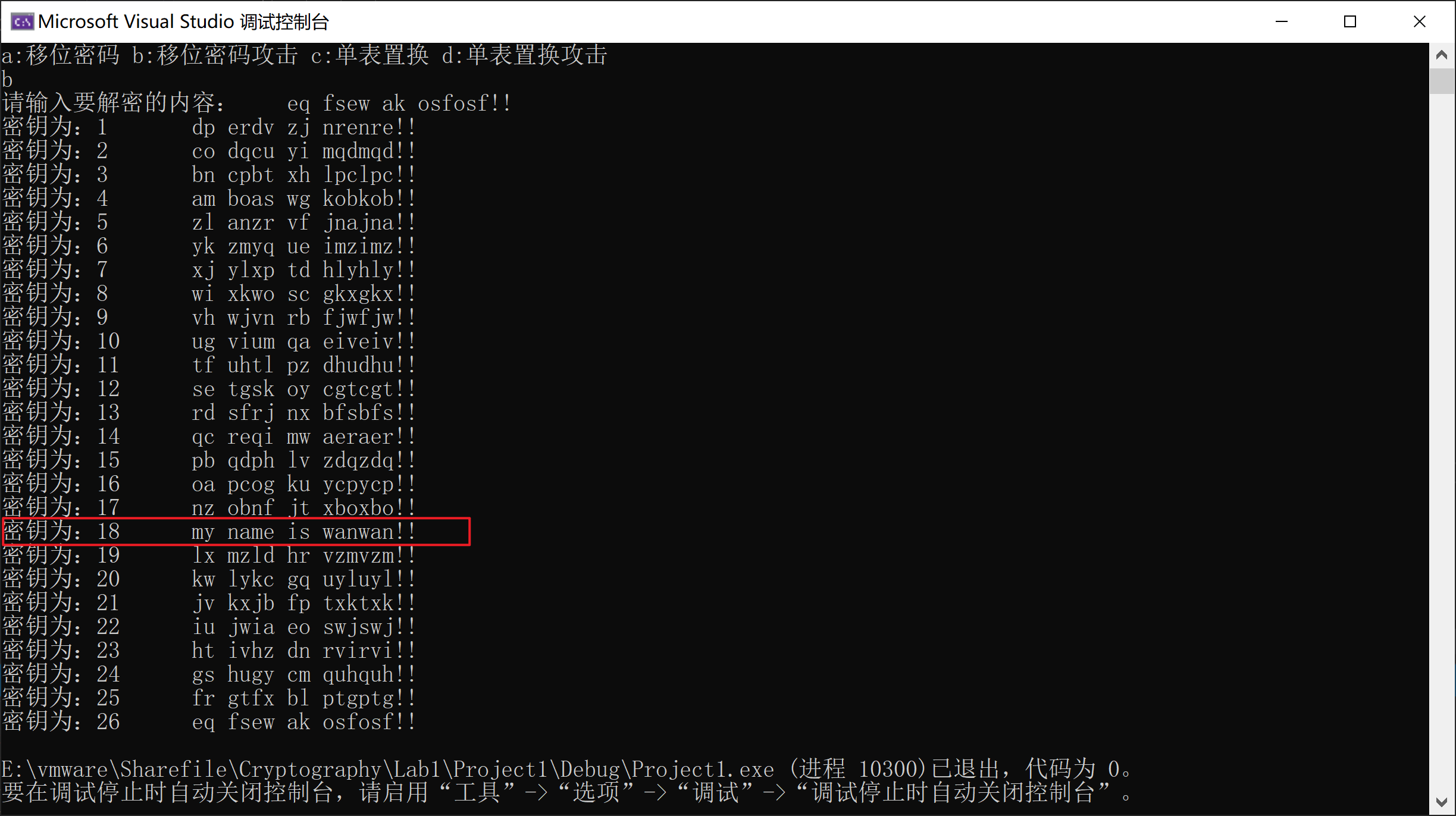
比如截获密文为:eq fsew ak osfosf!!
移位密码攻击
根据实验结果可以解出明文:my name is wanwan!! 密钥为18
单表置换密码
实验原理
单表置换密码就是根据字母表的置换对明文进行变换的方法,例如,给定置换 ABCDEFGHIJKLMNOPQRSTUVWXYZ HKWTXYSGBPQEJAZMLNOFCIDVUR
明文:public keys, 则有 密文:mckebw qxuo。 单表置换实现的一个关键问题是关于置换表的构造。置换表的构造可以有各种不同的途径,主要考虑的是记忆的方便。如使用一个短语或句子,删去其中的重复部分,作为置换表的前面的部分,然后把没有用到的字母按字母表的顺序依次放入置换表中。
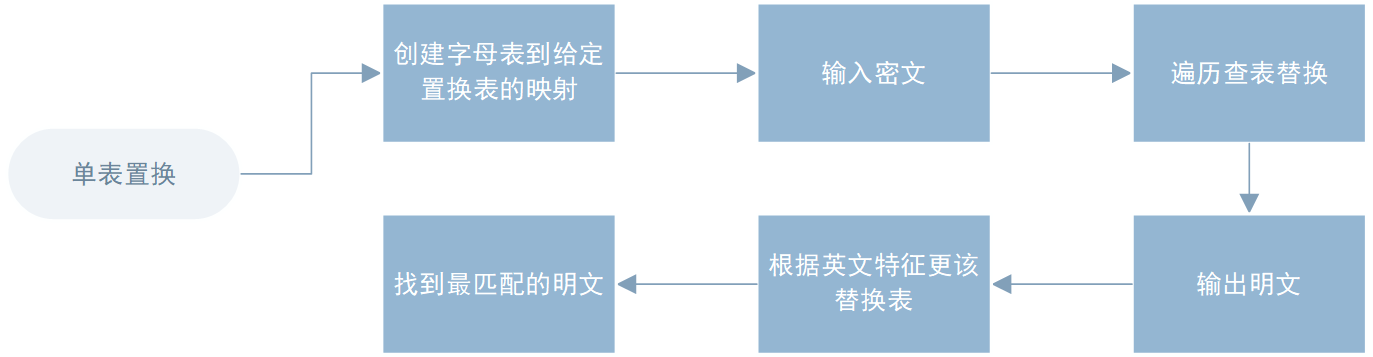
算法流程图
单表置换密码算法流程图
实验代码
1 2 3 4 5 6 7 8 9 10 11 12 13 14 15 16 17 18 19 20 21 22 23 24 25 26 27 28 29 30 31 32 33 34 35 36 37 38 39 40 41 map<string, string>mp_str; map<char , char >mp_ch; string str1 = "ABCDEFGHIJKLMNOPQRSTUVWXYZ" ; string str2 ; string key1="" ; cout << "输入密钥:\t" ; getline (cin, str2);getline (cin, str2);map<char , int >mp_is; for (int i = 0 ; i < 26 ; i++) { mp_is[str1[i]] = 0 ; } for (int i = 0 ; i < str2.length (); i++) { if (str2[i] >= 97 && str2[i] <= 122 ) { str2[i] -= 32 ; } else if (str2[i] < 65 || str2[i]>90 ) { continue ; } if (mp_is[str2[i]] == 0 ) { key1 += str2[i]; } mp_is[str2[i]] = 1 ; } for (int i = 0 ; i < 26 ; i++) { if (mp_is[str1[i]] == 0 ) { key1 += str1[i]; } } cout << "密钥为:\t" << key1 << endl; str2 = key1; for (int i = 0 ; i < 26 ; i++) { mp_ch[str1[i]] = str2[i]; } cout << "输入明文:\t" ; string a; getline (cin, a);int len = a.length ();string b = "" ; cout << "加密为:\t" ; for (int i = 0 ; i < len; i++) { if (a[i] >= 97 && a[i] <= 122 ) { a[i] -= 32 ; cout << char ((mp_ch[a[i]] + 32 )); } else if (a[i] < 65 || a[i]>90 ) { cout << a[i]; } else { cout << mp_ch[a[i]]; } }
1 2 3 4 5 6 7 8 9 10 11 12 13 14 15 16 17 18 19 20 21 22 23 24 25 26 27 28 29 30 31 32 33 34 35 36 37 map<string, string>mp_str; map<char , char >mp_ch; string str1 = "ABCDEFGHIJKLMNOPQRSTUVWXYZ" ; string str2; string key1 = "" ; cout << "输入密钥:\t" ; getline (cin, str2);getline (cin, str2);map<char , int >mp_is; for (int i = 0 ; i < 26 ; i++) { mp_is[str1[i]] = 0 ; } for (int i = 0 ; i < str2.length (); i++) { if (str2[i] >= 97 && str2[i] <= 122 ) { str2[i] -= 32 ; } else if (str2[i] < 65 || str2[i]>90 ) { continue ; } if (mp_is[str2[i]] == 0 ) { key1 += str2[i]; } mp_is[str2[i]] = 1 ; for (int i = 0 ; i < 26 ; i++) { if (mp_is[str1[i]] == 0 ) { key1 += str1[i]; } } cout << "密钥为:\t" << key1 << endl; str2 = key for (int i = 0 ; i < 26 ; i++) { mp_ch[str2[i]] = str1[i]; } cout << "输入密文:\t" ; string a; getline (cin, a);int len = a.length ();string b = "" ; cout << "解密为:\t" ; for (int i = 0 ; i < len; i++) { if (a[i] >= 97 && a[i] <= 122 ) { a[i] -= 32 ; cout << char ((mp_ch[a[i]] + 32 )); } else if (a[i] < 65 || a[i]>90 ) { cout << a[i]; } else { cout << mp_ch[a[i]]; } }
在单表置换的加解密中,考虑了输入字符串的大小写、是否为字母问题,通过cout<< char((mp_ch[a[i]] +32));来实现小写字母的置换表替换,之后通过(a[i] < 65 || a[i]>90)cout << a[i]; 过滤非字母元素。
实验结果
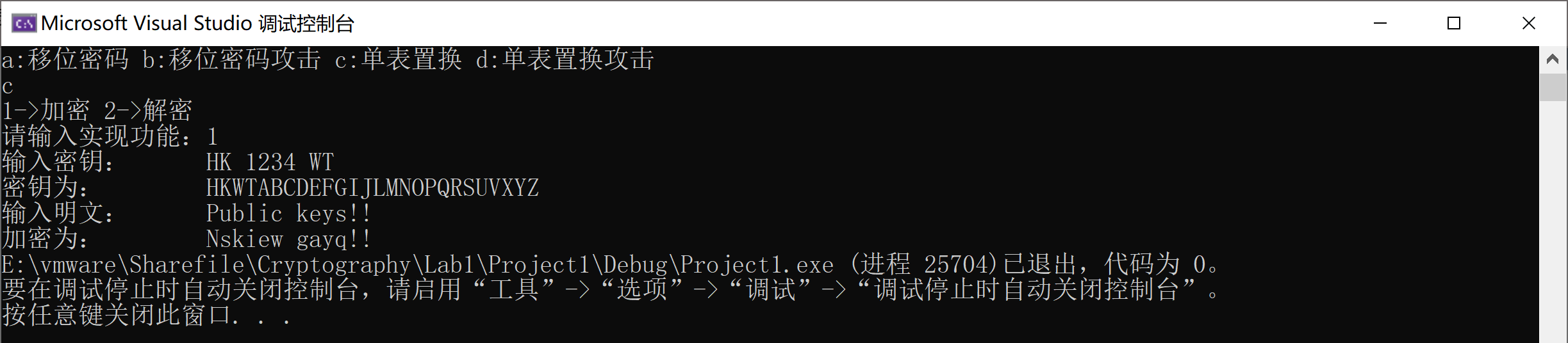
加密:例如明文为Public keys!!,输入为"HK 1234 WT",得到密钥为:"HKWTABCDEFGIJLMNOPQRSUVXYZ",那么密文应为Nskiew gayq!!;
加密实验结果
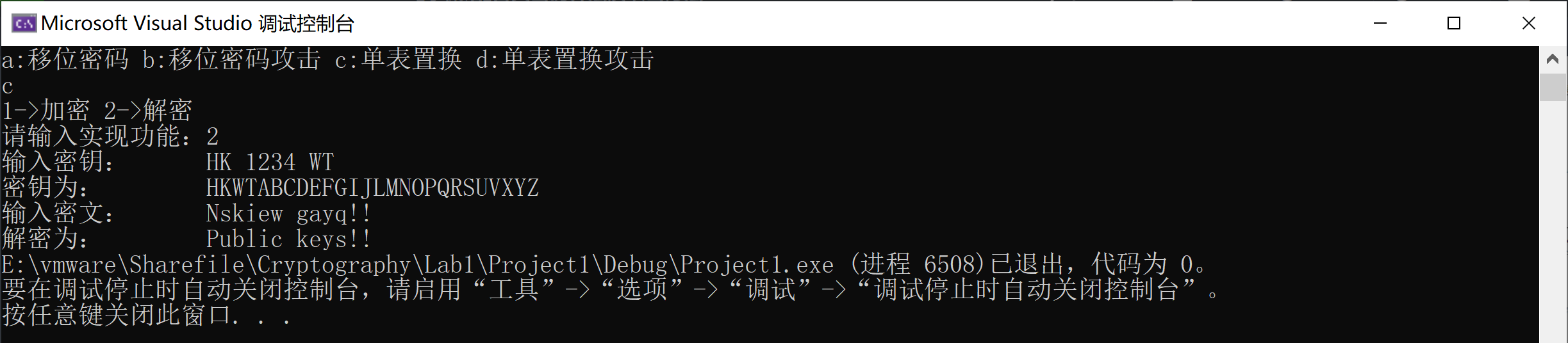
解密:同理,密文为Nskiew gayq !!时,输入为"HK 1234 WT",得到密钥为:"HKWTABCDEFGIJLMNOPQRSUVXYZ",解密得到明文Public keys !!
解密实验结果
对单表置换密码的攻击
实验原理
在单表置换密码中,由于置换表字母组合方式有26!种,约为4.03×1026。 所以采用穷举密钥的方法不是一种最有效的方法。对单表置换密码最有效的攻击方法是利用自然语言的使用频率:单字母、双字母组/三字母组、短语、词头/词尾等,这里仅考虑英文的情况。 英文的一些显著特征如下[1]:
短单词(small words):在英文中只有很少几个非常短的单词。因此,如果在一个加密的文本中可以确定单词的范围,那么就能得出明显的结果。一个字母的单词只有a和I。如果不计单词的缩写,在从电子邮件中选取500k字节的样本中,只有两个字母的单词仅出现35次,而两个字母的所有组合为26×26=676种。而且,还是在那个样本中,只有三个字母的单词出现196次,而三个字母的所有组合为26×26×26=17576种。
常用单词(common words):再次分析500k字节的样本,总共有5000多个不同的单词出现。在这里,9个最常用的单词出现的总次数占总单词数的21%,20个最常用的单词出现的总次数占总单词数的30%,104个最常用的单词占50%,247个最常用的单词占60%。样本中最常用的9个单词占总词数的百分比为: the 4.65 to 3.02 of 2.61 I 2.2 a 1.95 and 1.82 is 1.68 that 1.62 in 1.57
字母频率(character frequency):在1M字节旧的电子文本中,对字母"A"到"Z"(忽略大小写)分别进行统计。发现近似频率(以百分比表示):
r 5.97 h 4.52 l 4.3 d 3.24 u 3.21 c 3.06 m 2.8
p 2.34 y 2.22 f 2.14 g 2.00 w 1.69 b 1.58 v 1.03
k 0.79 x 0.30 j 0.23 q 0.12 z 0.09
从该表中可以看出,最常用的单字母英文是e和t,其他字母使用频率相对来说就小得多。这样,攻击一个单表置换密码,首先统计密文中最常出现的字母,并据此猜出两个最常用的字母,并根据英文统计的其他特征(如字母组合等)进行试译。
算法流程图
对置换密码攻击的流程图
实验代码
1 2 3 4 5 6 7 8 9 10 11 12 13 14 15 16 17 18 19 20 21 22 23 24 25 26 27 28 29 30 31 32 33 34 35 36 37 38 39 40 41 42 43 44 45 46 47 48 49 50 51 52 53 54 55 56 57 58 59 60 61 62 63 64 65 66 67 68 69 70 71 72 73 74 75 76 77 78 79 80 81 82 83 84 85 86 87 88 89 90 91 92 93 94 95 96 cout << "输入明文:" ; string a; getline (cin, a);getline (cin, a);string a_copy = a; int len = a.length ();int sum = len;map<char , float >mp_cf; string str = "abcdefghijklmnopqrstuvwxyz" ; string str_c = str; for (int i = 0 ; i < 26 ; i++) { mp_cf[str[i]] = 0 ; } for (int i = 0 ; i < len; i++) { if (a[i] == 32 ) { cout << " " ; sum--; continue ; } if (a[i] >= 65 && a[i] <= 90 ) { a[i] += 32 ; } mp_cf[a[i]] += 1 ; } cout << endl; for (char i = 0 ; i < 26 ; i++) { mp_cf[str[i]] /= sum; cout << str[i] << ":" << mp_cf[str[i]] << endl; } for (int i = 0 ; i < 26 - 1 ; i++) { for (int j = 0 ; j < 26 - i -1 ; j++) { if (mp_cf[str[j]] < mp_cf[str[j + 1 ]]) { float temp_f= mp_cf[str[j]]; char temp_c=str[j]; str[j] = str[j + 1 ]; mp_cf[str[j]] = mp_cf[str[j + 1 ]]; str[j + 1 ] = temp_c; mp_cf[str[j + 1 ]] = temp_f; } } } cout << "----------------------------------" <<endl; for (char i = 0 ; i < 26 ; i++) { cout << str[i] << ":" << mp_cf[str[i]] << endl; } map<char , char > map_stos; string net_str = "etoiansrhlducmpyfgwbvkxjqz" ; for (char i = 0 ; i < 26 ; i++) { map_stos[str[i]] = net_str[i]; } cout << "置换表为:" << endl; for (char i = 0 ; i < 26 ; i++) { cout << str_c[i] << " " ; } cout << endl; for (char i = 0 ; i < 26 ; i++) { cout << map_stos[str_c[i]] << " " ; } cout << endl << "解密结果:" << endl; a = a_copy; for (int i = 0 ; i < len; i++) { if (a[i] == 32 ) { cout << " " ; sum--; continue ; } if (a[i] >= 65 && a[i] <= 90 ) { a[i] += 32 ; } cout << map_stos[a[i]]; } while (1 ) { char old1; char new1; cout <<endl<<"---------------------------------------------------" << endl; cout << "the first letter:" ; cin >> old1; cout << "the second letter:" ; cin >> new1; cout << "--------------" << endl; for (int i = 0 ; i < 26 ; i++) { if (map_stos[str[i]] == old1) { map_stos[str[i]] = new1; continue ; } if (map_stos[str[i]] == new1) { map_stos[str[i]] = old1; continue ; } } cout << "置换表为:" << endl; for (char i = 0 ; i < 26 ; i++) { cout << str_c[i] << " " ; } cout << endl; for (char i = 0 ; i < 26 ; i++) { cout << map_stos[str_c[i]] << " " ; } cout << endl << "解密结果:" << endl; for (int i = 0 ; i < len; i++) { if (a[i] == 32 ) { cout << " " ; sum--; continue ; } if (a[i] >= 65 && a[i] <= 90 ) { a[i] += 32 ; } cout << map_stos[a[i]]; } }
实验步骤与结果
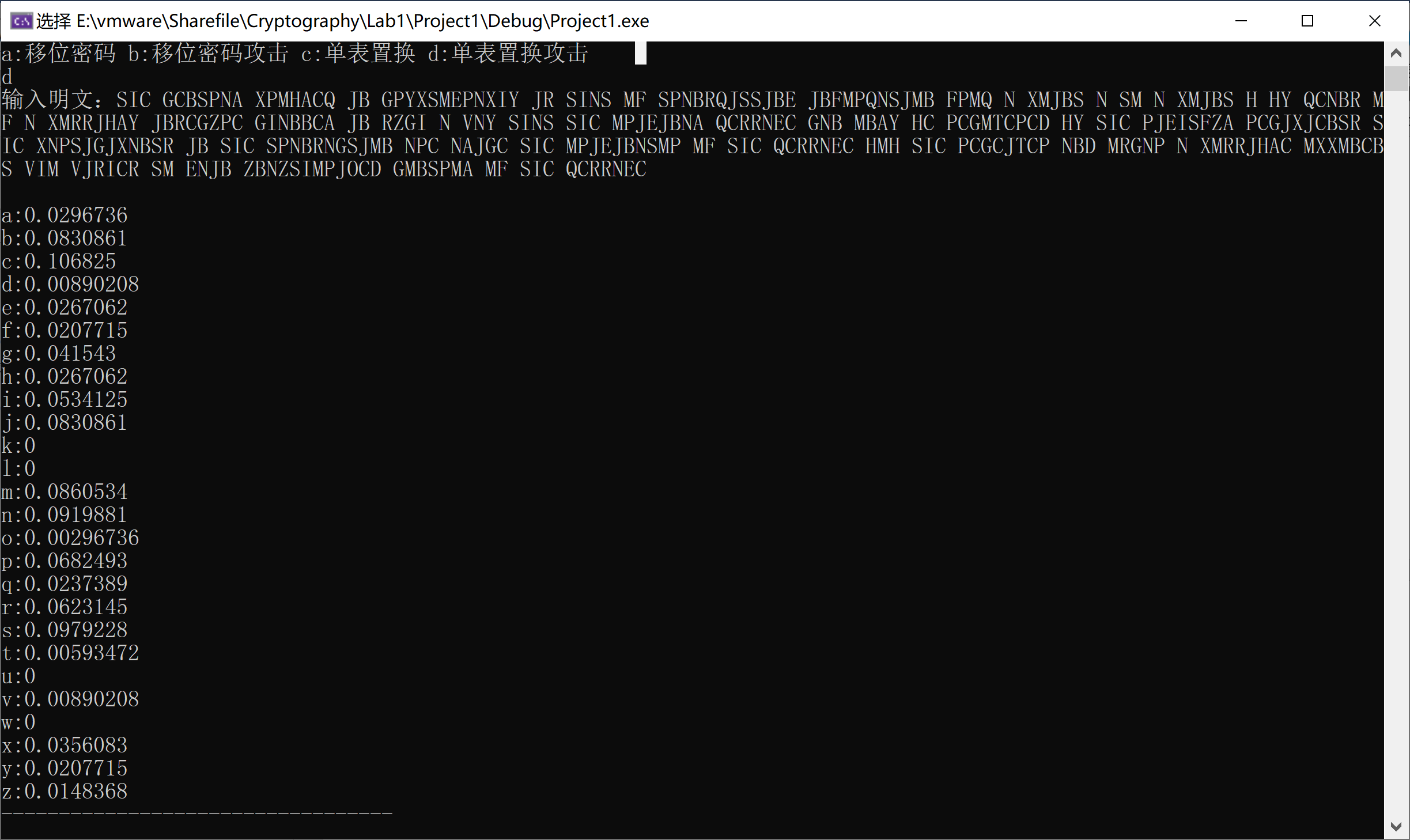
1.输入明文,统计输入明文字母出现频率
明文字母出现频率
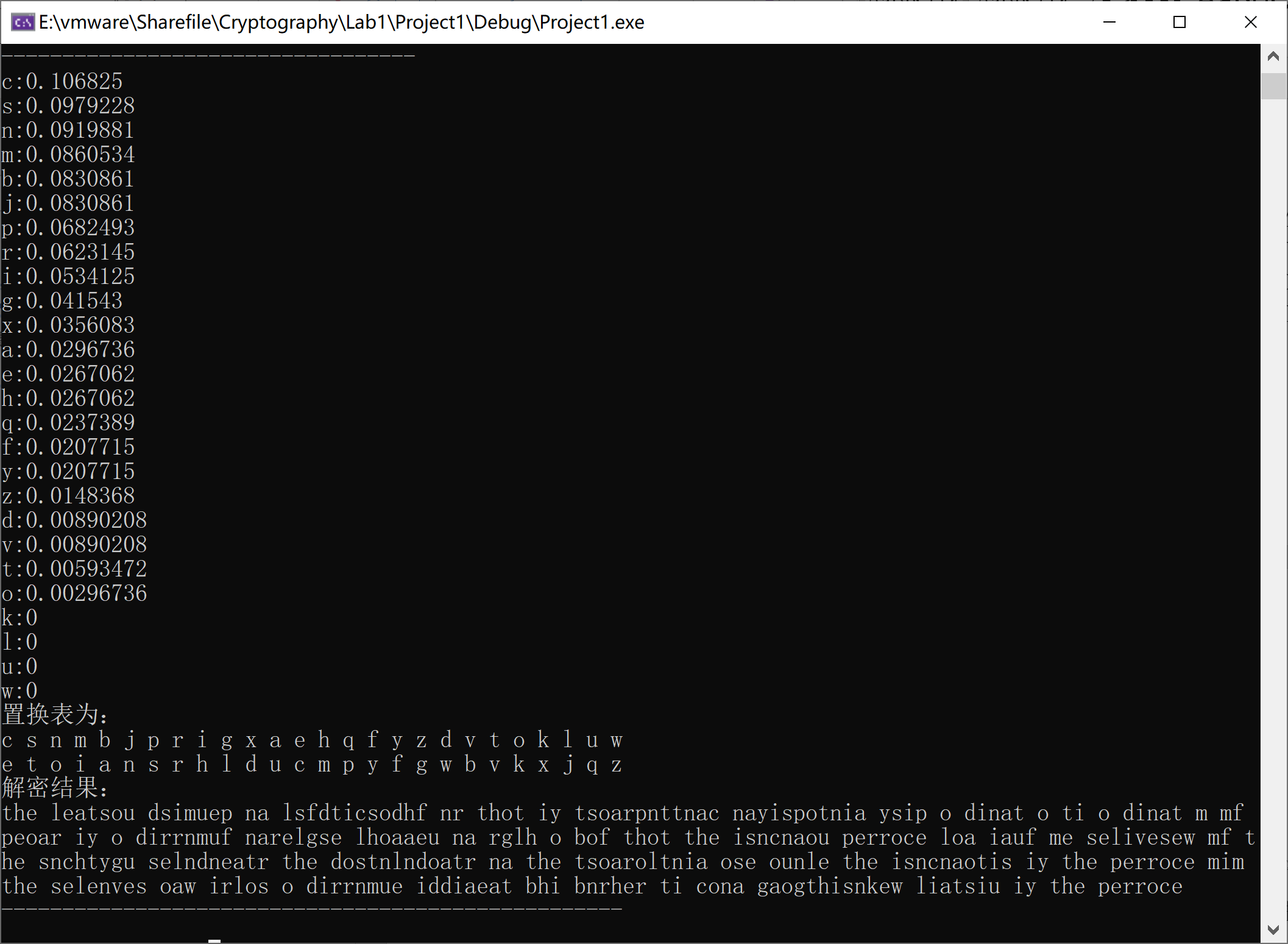
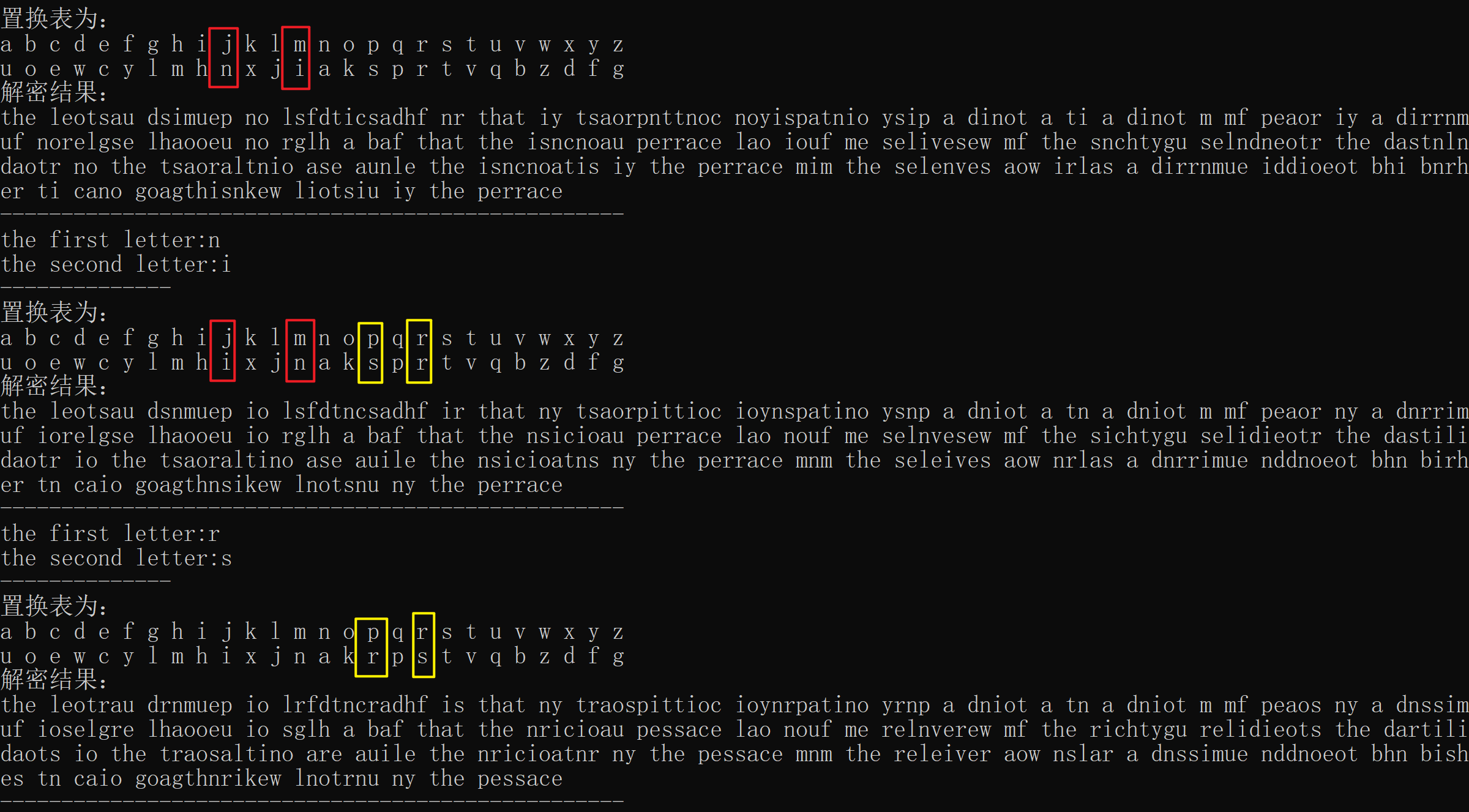
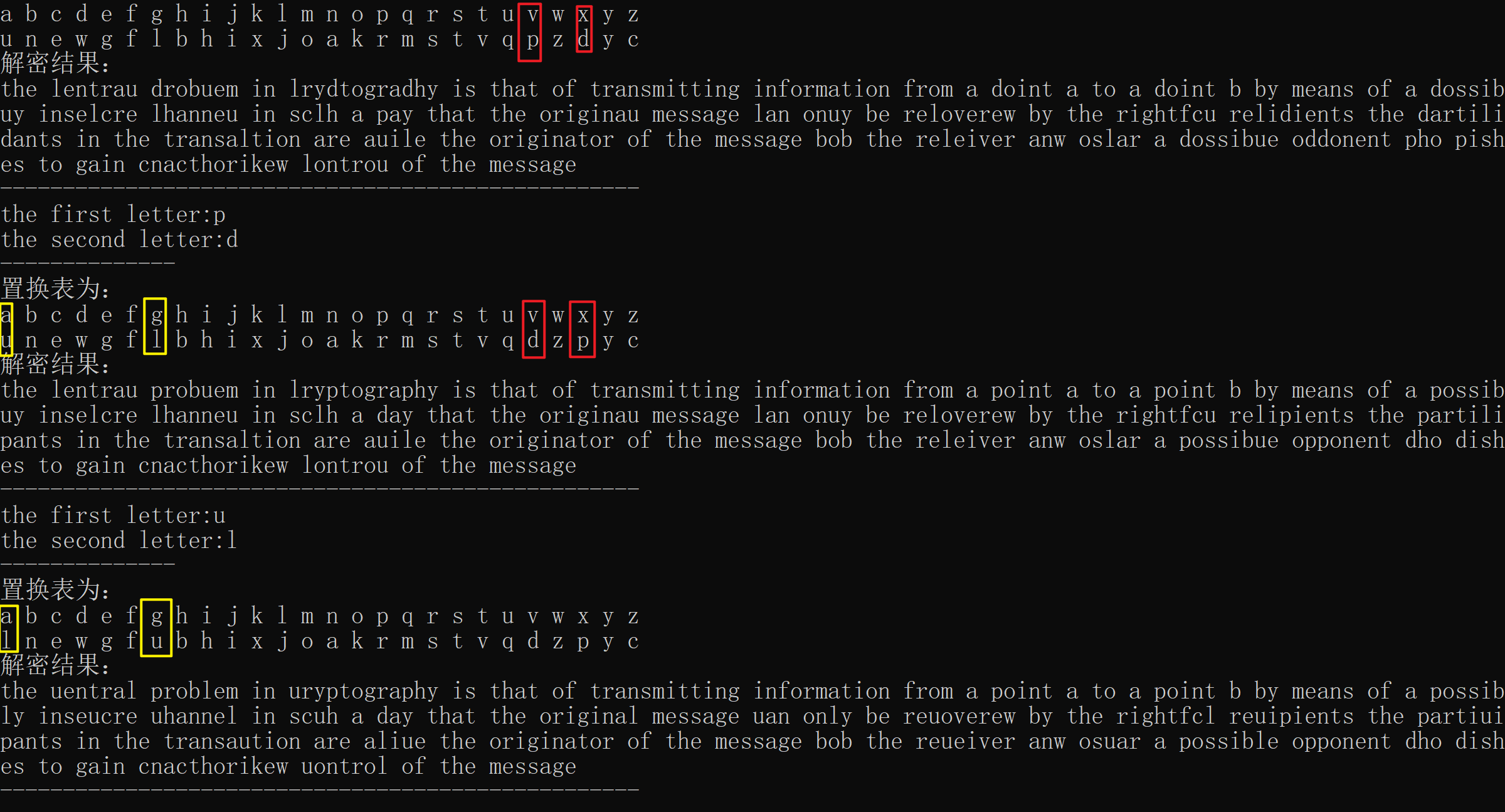
2.将字母出现频率排序,然后根据电子文本中的字母频率进行简单置换表构建,执行第一次解密:
明文字母出现频率
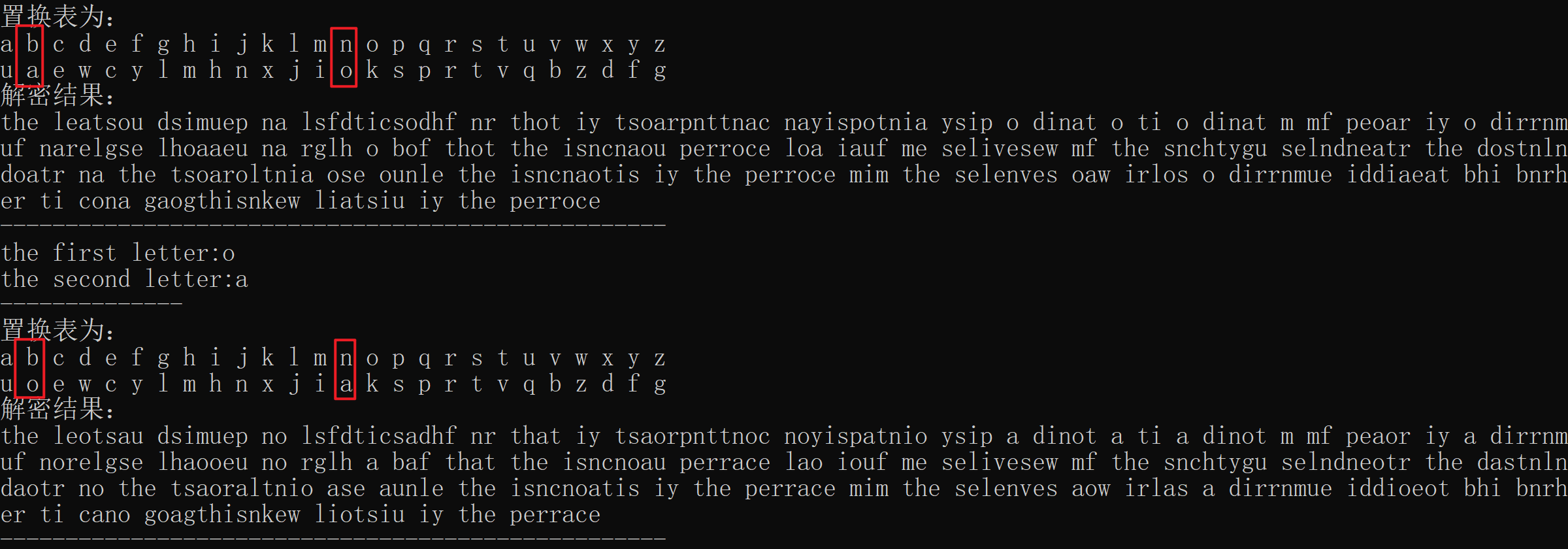
3.观察解密后的文本,根据英文特征修改置换表:
(1)在第一次解密后,发现文本中单个字母"o"的出现频率非常高,由此可以推测"o"实际应该为"a":
o<->a
(2)"nr"跟在"that"前,推测"nr"实际为"is":
n<->i,r<->s
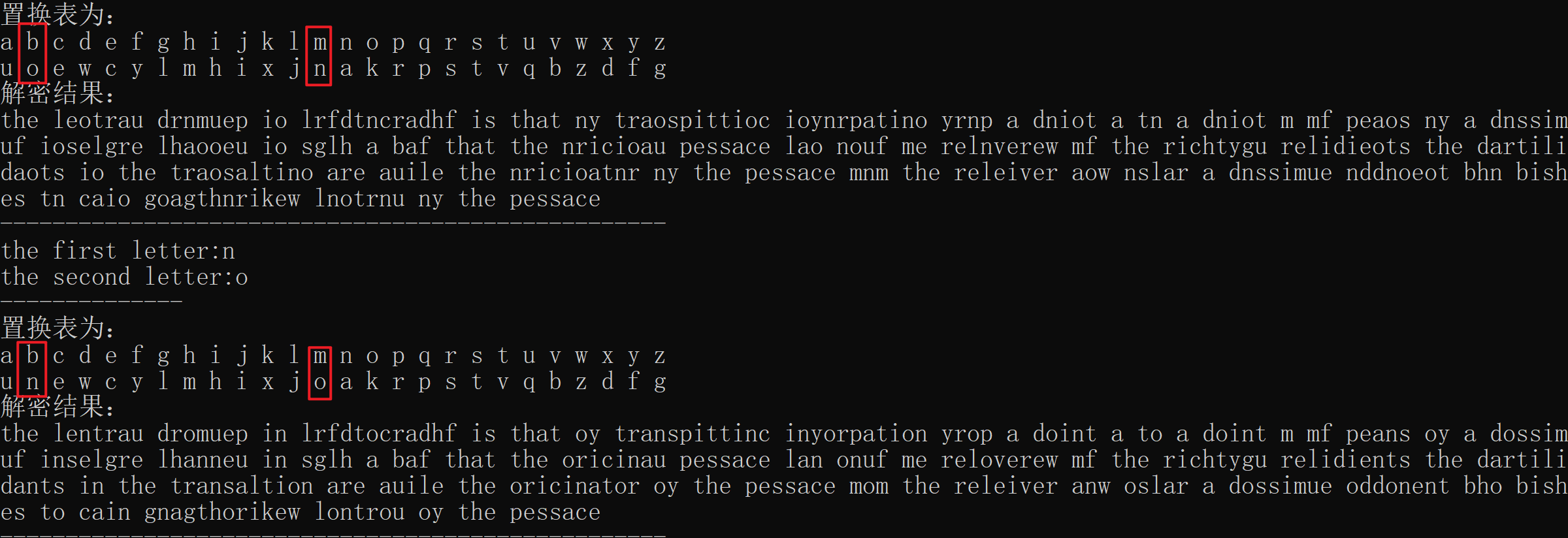
(3)新解密出的明文中有"a doint a tn a doint m",推测"tn"应该为"to"
n<->o
(4)存在"is that oy"推测"oy"应该为"of":
y<->f
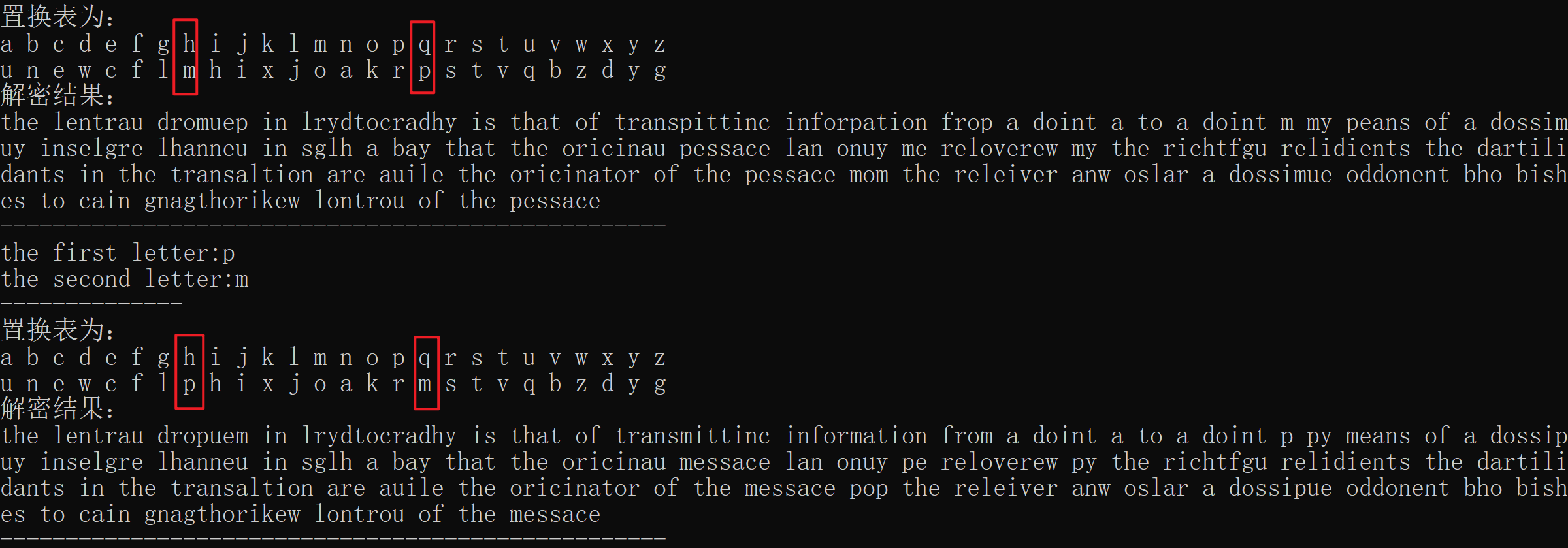
(5)继续分析在(3)中出现的语句"frop a doint a tn a doint m",很明显这里是"from..to..",所以将p与m对换:
p<->m
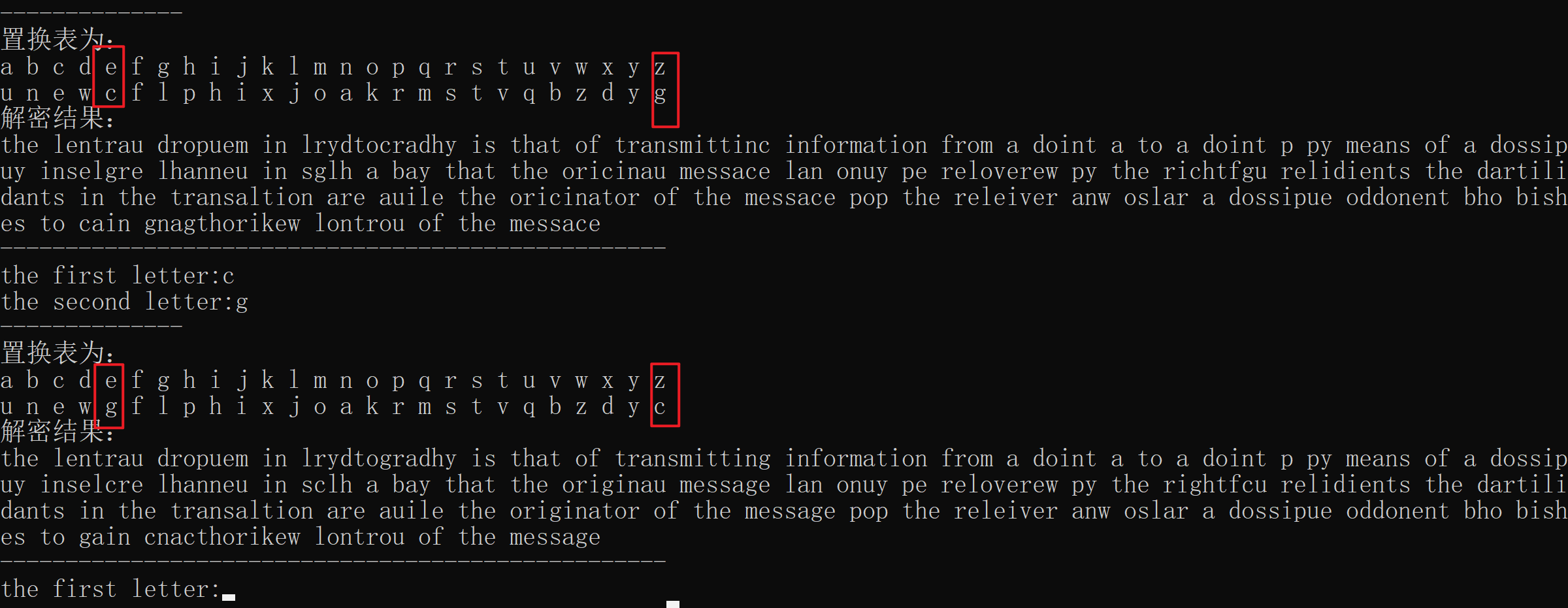
(6)文本结尾处有一个单词"messace",推测应该为"message",将c与g互换:
c<->g
(7)存在短语" py means of",并且文本中也出现了"py",推测应该是"by means of"和"by",所以将p与b对换:
b<->p
(8)文本中第三个单词为"drobuem",推测是problem,所以将p和d对换、u和l对换:
d<->p,u<->l
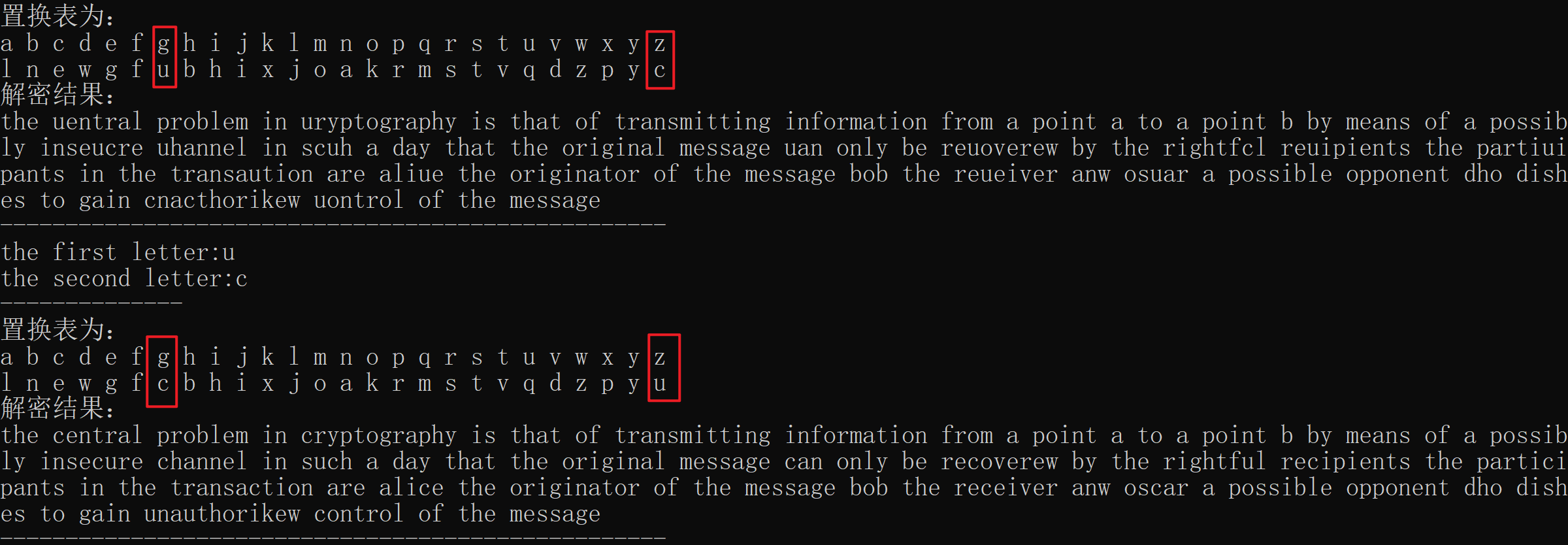
(9)文本中第二个单词为"uentral",后面还出现了"uan",推测是"central"和"can",所以将u和c对换:
u<->c
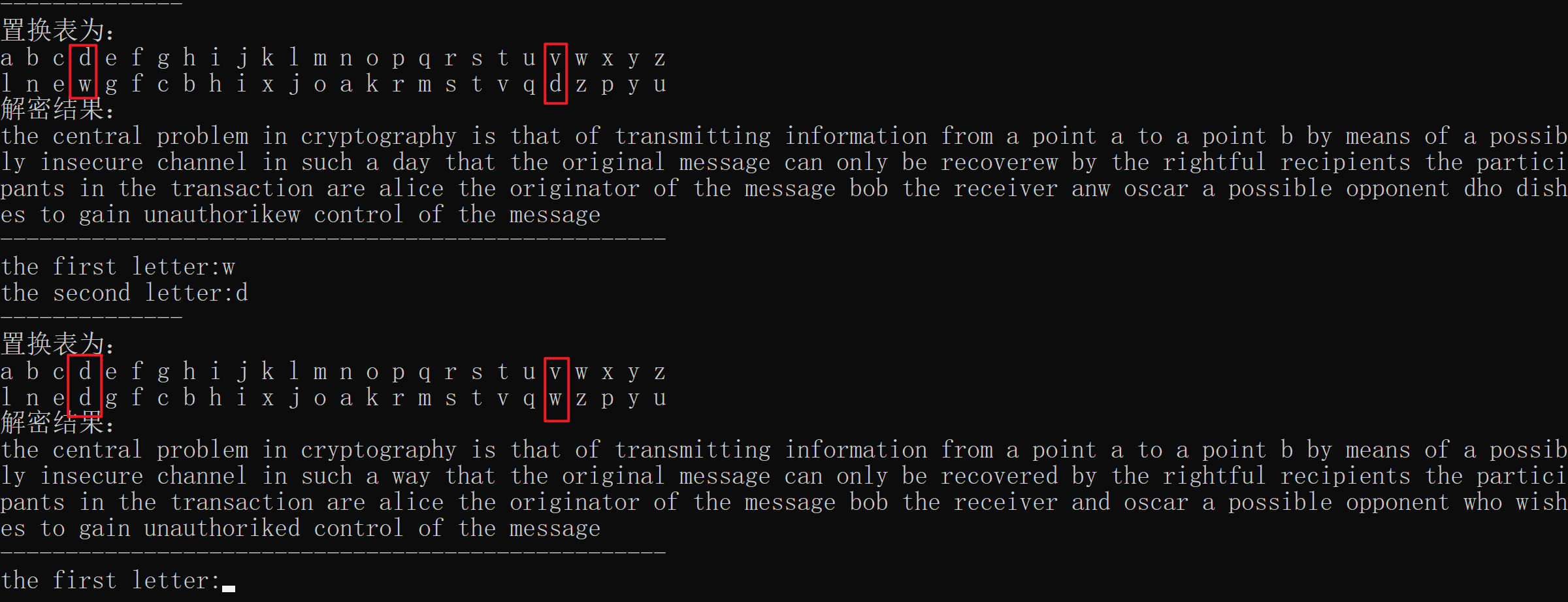
(10)文本中出现了"recoverew"和"anw",推测应该为"recovered"和"and",所以将w与d对换:
w<->d
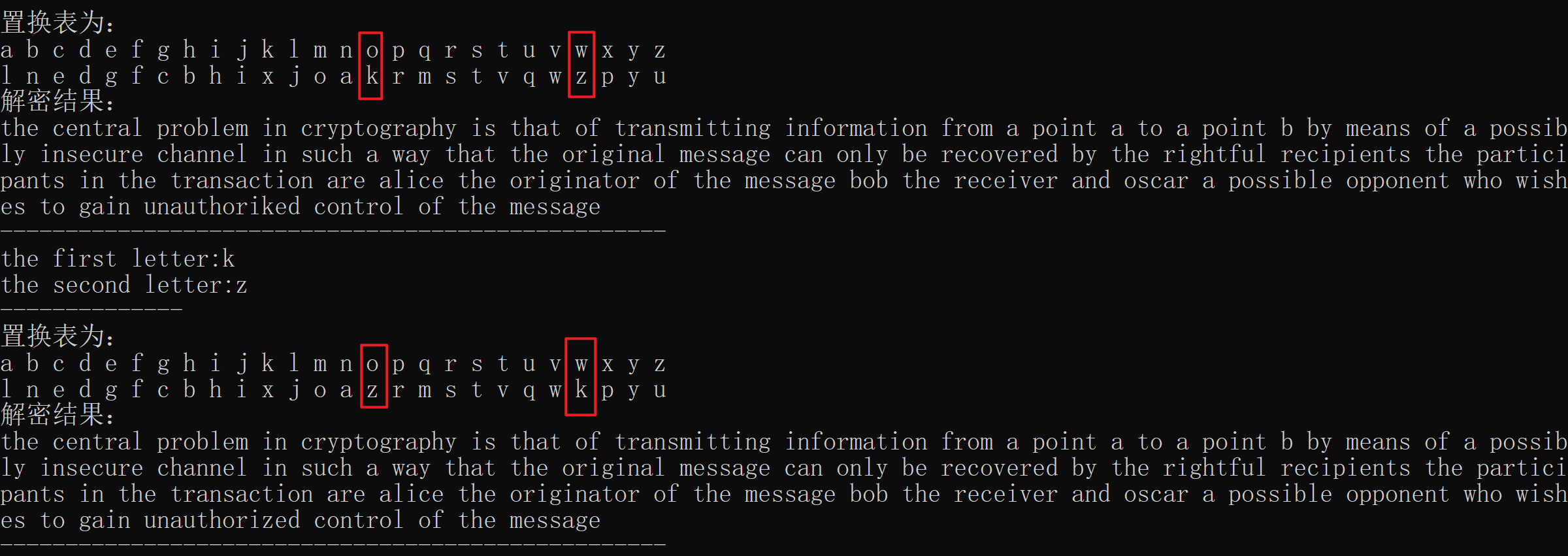
(11)在最后出现了单词"unauthoriked",推测应该为"unauthorized",所以将k和z对换:
k<->z
经过上述步骤之后,已经得到了通顺的语句,解密得到的明文为: the central problem in cryptography is that of transmitting information from a point a to a point b by means of a possibly insecure channel in such a way that the original message can only be recovered by the rightful recipients the participants in the transaction are alice the originator of the message bob the receiver and oscar a possible opponent who wishes to gain unauthorized control of the message